
Chronic Fatigue and the Upper Cervical Spine
In the upper cervical spine, there are four main structures to focus on. They are:
The Foramen Magnum of the Occipital bone
The Atlas vertebra (1st cervical bone)
The Axis vertebra (2nd cervical bone)
The Brainstem of the Nerve System.

The Brainstem exits from the Foramen Magnum. The Atlas and Axis bones protect and surround the Brainstem. The brainstem connects all the nerves from the brain to the nerves of the body.
In Upper Cervical Chiropractic, the focus is on the neurophysiology and biomechanics of the Craniocervical Joint and how it effects all other areas of the body in some way, shape or form.
Regarding Chronic Fatigue, the secondary focus is on the Reticular Activating System.
The Reticular Activating System (RAS) assists with consciousness, the regulation of arousal and sleep−wake transitions, motivation and emotion. The RAS helps “filter” pertinent stimulation and information between the brain and body senses to maintain relative cohesion between us and our environment.

The Nerve System in general does four main things:
It controls all the movements we make
Senses everything we feel
Regulates all our body organs
Relates us to the outside world
When nerves get stressed, it effects their sensitivity, perception and behavior. There are three types of stress we deal with in life. The stresses are physical, chemical and emotional in nature. These stresses create nerve tension, which imbalances the muscles of the spine.
One specific job of the brainstem is to adapt to these stresses and help bring the spine back into balance. If the stresses are too great for the brainstem to adapt, compensations arise. One particular compensation that occurs in the upper cervical spine is a vertebral subluxation.
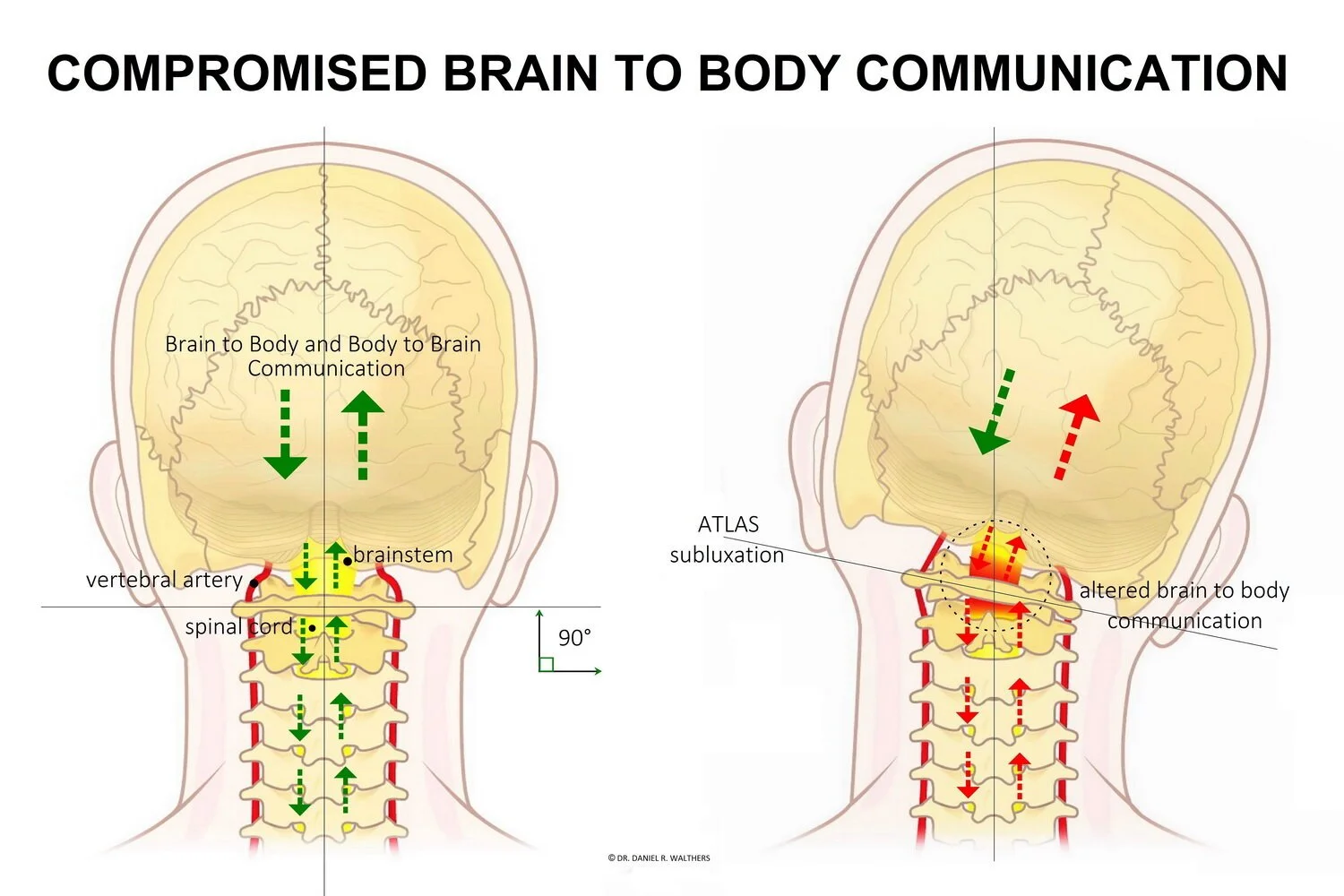
A vertebral subluxation will cause the Atlas and Axis bones to get locked in a misaligned position. This lock will perpetuate nerve tension, which imbalances the spine. This tension will lead to abnormal sensitivity, perception and behavior of the brainstem and surrounding nerves. Nerve System function is disrupted.
Over time, this disruption can lead to symptoms. The usual symptoms of Chronic Fatigue are:
Profound, unexplained fatigue that is not caused by exertion and not relieved by rest.
A severe "crash" in physical or mental energy following minor activities, often lasting over 24 hours.
Waking up feeling tired despite sleeping, or disturbances in sleep patterns.
"Brain fog," issues with memory, focus, and concentration.
Dizziness, lightheadedness, or fainting upon standing or sitting upright.