Ligaments: Keeping the Upper Cervical Spine in Check
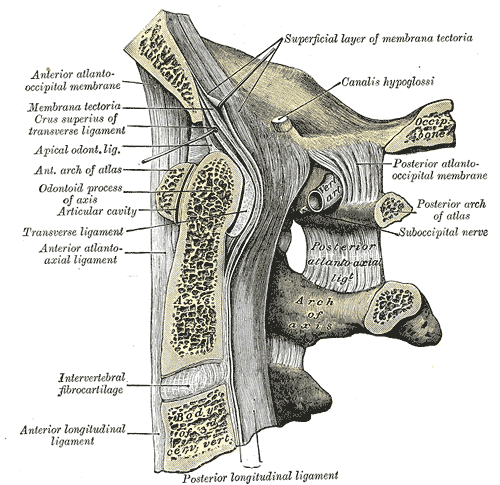
The upper cervical spine is designed for mobility. Over 50% of neck motion occurs in the joints between the occiput, atlas and axis bones.
The occipitoatlantoaxial joint is second only to the shoulder joint in terms of range of motion potential. Both the shoulder and the upper cervical spine rely heavily on ligaments for mobility and stability. Their reliance on ligaments contributes to one of their greatest strengths: mobility; but also to one of their greatest weaknesses: instability.
Simply put, a ligament is a fibrous tissue that connects one bone to another. Dr. Mabel Palmer, who literally wrote the book on anatomy, had this to say about ligaments: “A ligament is pliant and flexible to allow for the utmost perfection of movement, but it is strong and tough to withstand the most severely applied force, and so is well adapted to serve as the connecting medium between the bones.”
Ligaments of the upper cervical spine play a major role in proprioception and sensory function. Proprioception is how the body communicates with the brain its position in space. One of the greatest concentrations of proprioceptors, occurring in the form of mechanoreceptors, is found in the upper cervical spine. Mechanoreceptors found in the ligaments of the upper cervical spine detect mechanical stress, sudden changes and extreme range of motion positions.
Some ligaments of the upper cervical spine have unique characteristics. For example, the nuchal ligament, yellow ligament and atlanto-occipital membrane attach directly to the dura mater of the Nerve System. The dura mater is the outermost membrane that envelopes the brain and spinal cord. This highlights the communication between the brain and body and the vital role of the upper cervical spine in that connection.
Another unique ligament is the Alar ligament, also known as the Check ligament. The Alar ligaments are a pair of short fibrous bands that attach the Axis vertebra to the Occipital bone. They are critical in limiting head rotation and side bending of the neck. They help keep upper cervical spine stability “in check.”
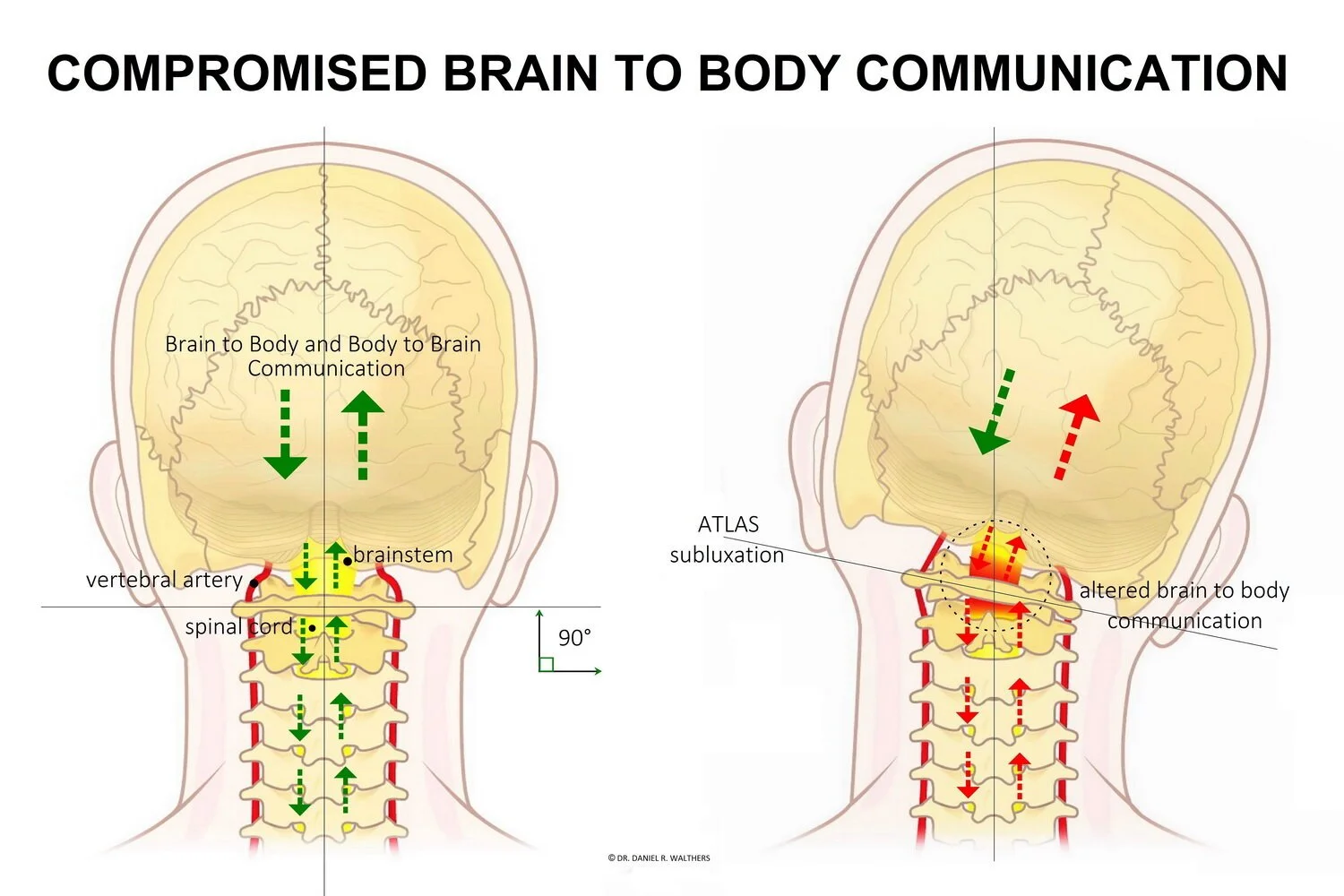
When the upper cervical spine is stressed beyond its adaptive limits, it can get locked in a misaligned position. This lock will imbalance the spine and place tension on nerves. This will lead to abnormal function of the Nerve System and mechanics of the spine. This is what we call in Chiropractic a vertebral subluxation.
A vertebral subluxation abnormally stretches upper cervical ligaments, distorting mechanoreceptor information that is sent to the brain. This negatively effects proprioception and interferes with how the brain communicates with the body.
In Upper Cervical Chiropractic, the focus is on improving the neurophysiology and biomechanics of the Craniocervical Joint. By adjusting the upper cervical spine, connective tissue such as ligaments can send better information to the brain. How the body corresponds with the brain and how the brain communicates with the body is at a greater potential.
- Jarek Esarco, DC, CACCP
Related Blogs:
Other Resources:
Jarek Esarco, DC, CACCP is a pediatric, family wellness and upper cervical specific Chiropractor. He is an active member of the International Chiropractic Pediatric Association (ICPA). Dr. Jarek has postgraduate certification in Pediatric Chiropractic through the ICPA. Dr. Jarek also has postgraduate certification in the HIO Specific Brain Stem technique through The TIC Institute. Dr. Jarek is happily married to his wife Regina. They live in Youngstown, Ohio with their daughter Ruby.