Spinal Accessory Nerve and the Upper Cervical Spine

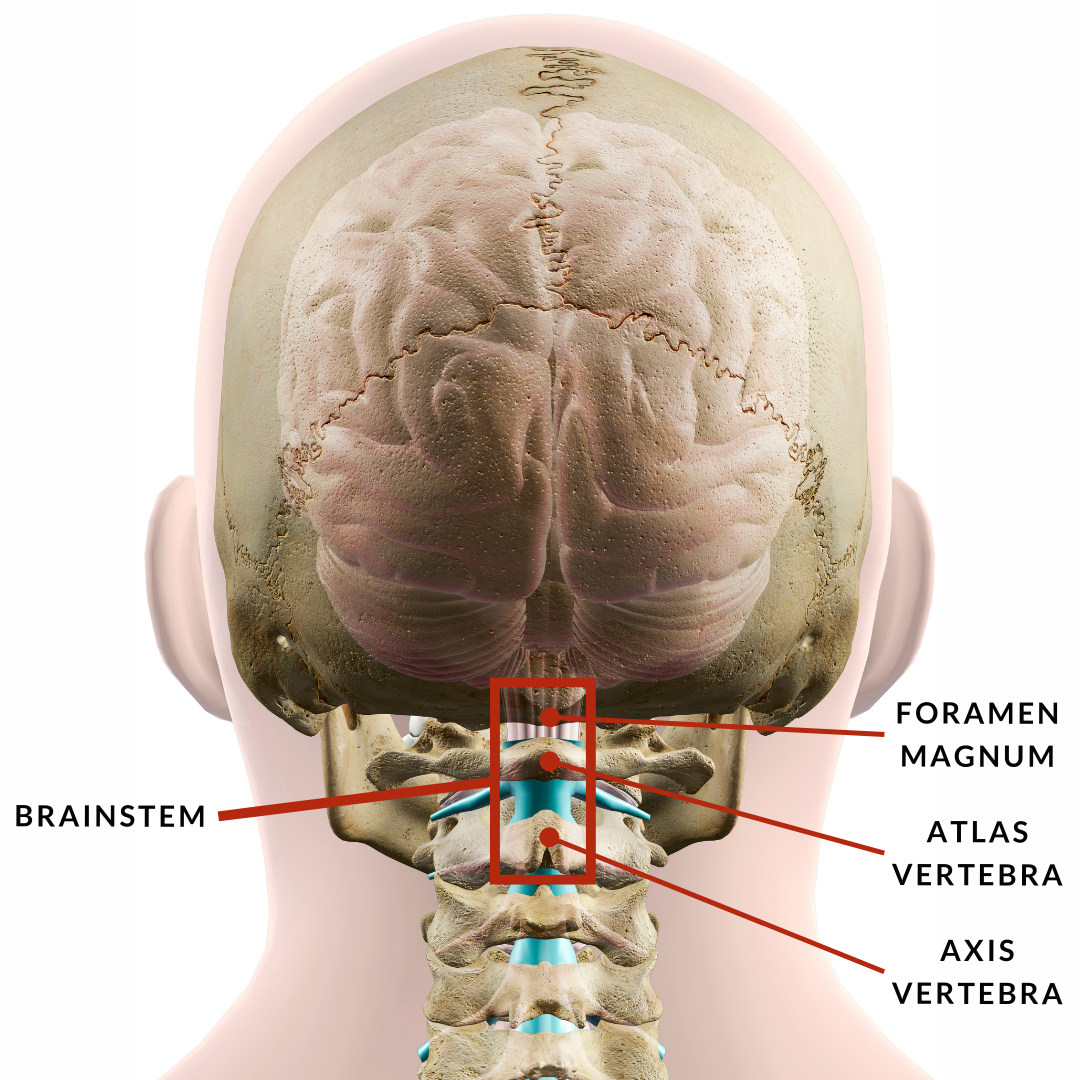
In Upper Cervical Chiropractic, the focus is on the neurophysiology and biomechanics of the Craniocervical Joint. The four main sections to consider are:

  1. The Foramen Magnum of the Occipital bone

  2. The Atlas vertebra (1st cervical bone)

  3. The Axis vertebra (2nd cervical bone)

  4. The Brainstem of the Nerve System

The Nerve System in general does four main things:

  1. It controls all the movements we make

  2. Senses everything we feel

  3. Regulates all our body organs

  4. Relates us to the outside world

To simplify, the brain stores information and generates electrical signals. The brain uses nerve fibers in the form of spinal nerves, cranial nerves and peripheral nerves to send that information out to the body.

There are also nerve fibers at every organ, gland and tissue of the body that send information back up to the brain for interpretation. All the trillions of nerves that make up the Nerve System communicate with each other in a complete, unbroken cycle.

An important meet-up point in the nerve cycle occurs at the upper cervical spine. This is where the majority of nerve signals, from the brain and body, intersect. The upper cervical spine protects and surrounds the inferior section of the brainstem and superior section of the spinal cord.

Let’s look at cranial nerve XI (11), the spinal accessory nerve, and its connection to the upper cervical spine.

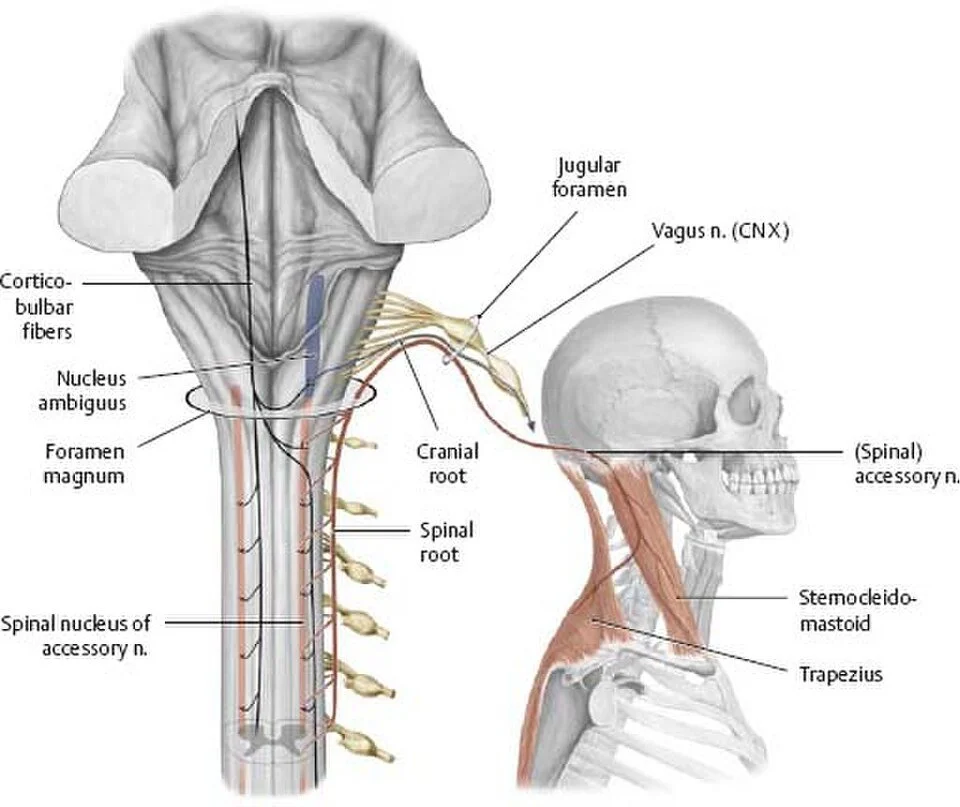
The spinal accessory nerve is located on the lower section of the brainstem, the medulla oblongata, just below the vagus nerve. It exits the cranium via the jugular foramen which is found laterally on either side of the foramen magnum. Upon exiting the skull, it travels in front of the transverse process of the atlas bone and along the internal carotid artery. It travels down the neck and innervates the sternocleidomastoid and trapezius muscles of the neck. The spinal accessory nerve communicates directly with the vagus ganglion root and with the C1-C6 spinal nerves.

When nerves get stressed, it effects their sensitivity, perception and behavior. There are three types of stress we deal with in life. The stresses are physical, chemical and emotional in nature. These stresses create nerve tension, which imbalances the muscles of the spine.

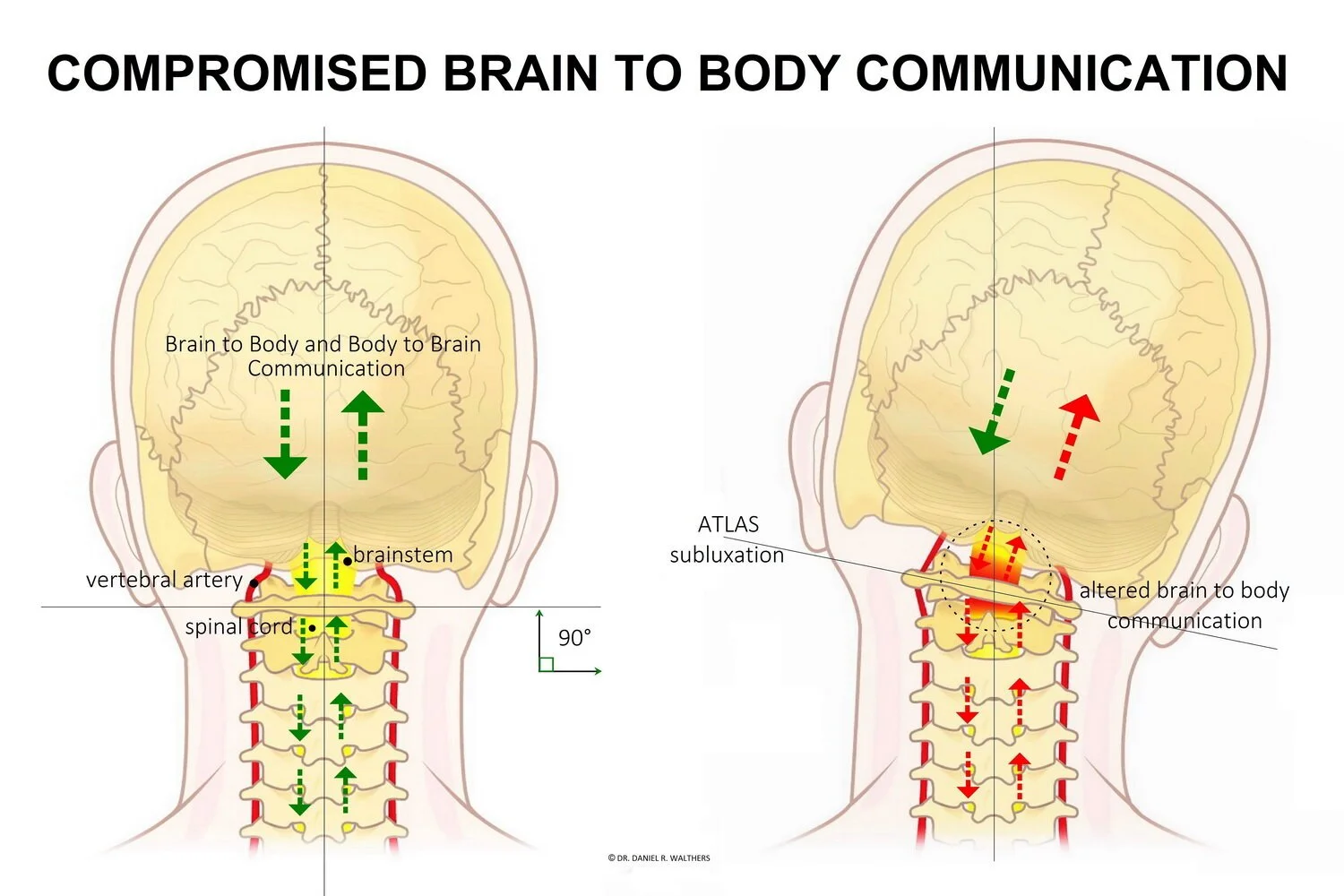
The Nerve System will adapt to the best of its ability to these stresses and help bring the spine back into balance. If the stresses are too great for the Nerve System to adapt, compensations arise. A compensation that occurs in the upper cervical spine is a vertebral subluxation.

A vertebral subluxation will cause the Atlas and Axis bones to get locked in a misaligned position. This lock will perpetuate nerve tension, which imbalances the spine. A vertebral subluxation obstructs communication along the nerve cycle. This interferes with normal sensation, perception and behavior of the Nerve System. Nerve System function is disrupted.

A functional disruption of the spinal accessory nerve will cause abnormal movement or weakness in neck rotation, lateral flexion or extension. It can also cause abnormal movement or weakness in shoulder elevation, depression or retraction.

The goal of Chiropractic is to correct nerve tension and spine imbalance. Chiropractors do this by adjusting the vertebral subluxation of the upper cervical spine. Correcting the subluxation better optimizes the function of the brainstem and associated nerves. The Nerve System can sense, perceive and behave at a greater potential when a subluxation is corrected.

- Jarek Esarco, DC, CACCP

Related Blogs:

Other Resources:

Jarek Esarco, DC, CACCP is a pediatric, family wellness and upper cervical specific Chiropractor. He is an active member of the International Chiropractic Pediatric Association (ICPA). Dr. Jarek has postgraduate certification in Pediatric Chiropractic through the ICPA. Dr. Jarek also has postgraduate certification in the HIO Specific Brain Stem technique through The TIC Institute. Dr. Jarek is happily married to his wife Regina. They live in Youngstown, Ohio with their daughter Ruby.

Jarek EsarcoComment