
Immunity and the Upper Cervical Spine
In the upper cervical spine, there are four main structures to focus on. They are:
The Foramen Magnum of the Occipital bone
The Atlas vertebra (1st cervical bone)
The Axis vertebra (2nd cervical bone)
The Brainstem of the Nerve System.

The Brainstem exits from the Foramen Magnum. The Atlas and Axis bones protect and surround the Brainstem. The brainstem connects all the nerves from the brain to the nerves of the body.
In Upper Cervical Chiropractic, the focus is on the neurophysiology and biomechanics of the Craniocervical Joint and how it effects all other areas of the body in some way, shape or form.
Regarding Immunity, the secondary focus is on the Intermedius Nucleus of the Medulla.
The Intermedius Nucleus of the Medulla receives afferent information from the neck musculature. It collects information from the mechanoreceptors of the C1-C3 area of the spine. Mechanoreceptors sense injury and infection. The Intermedius Nucleus of the Medulla integrates information from the head and neck and relays this information to the Nucleus Tractus Solitarius. From here, the Nucleus Tractus Solitarius helps generate autonomic responses. The autonomic Nerve System helps regulate the immune system by modulating immune cells. The autonomic branch helps coordinate bodily responses to internal/external changes, influencing inflammation and immune cell activity through these neural pathways, acting as a vital hub in neuro-immune communication.
The Nerve System in general does four main things:
It controls all the movements we make
Senses everything we feel
Regulates all our body organs
Relates us to the outside world
When nerves get stressed, it effects their sensitivity, perception and behavior. There are three types of stresses we deal with in life. The stresses are physical, chemical and emotional in character. These stresses create nerve tension and spine imbalance.
One specific job of the brainstem is to adapt these stresses and help bring the spine back into balance. If the stresses are too great for the brainstem to adapt, compensations arise. One particular compensation that occurs in the upper cervical spine is a vertebral subluxation.
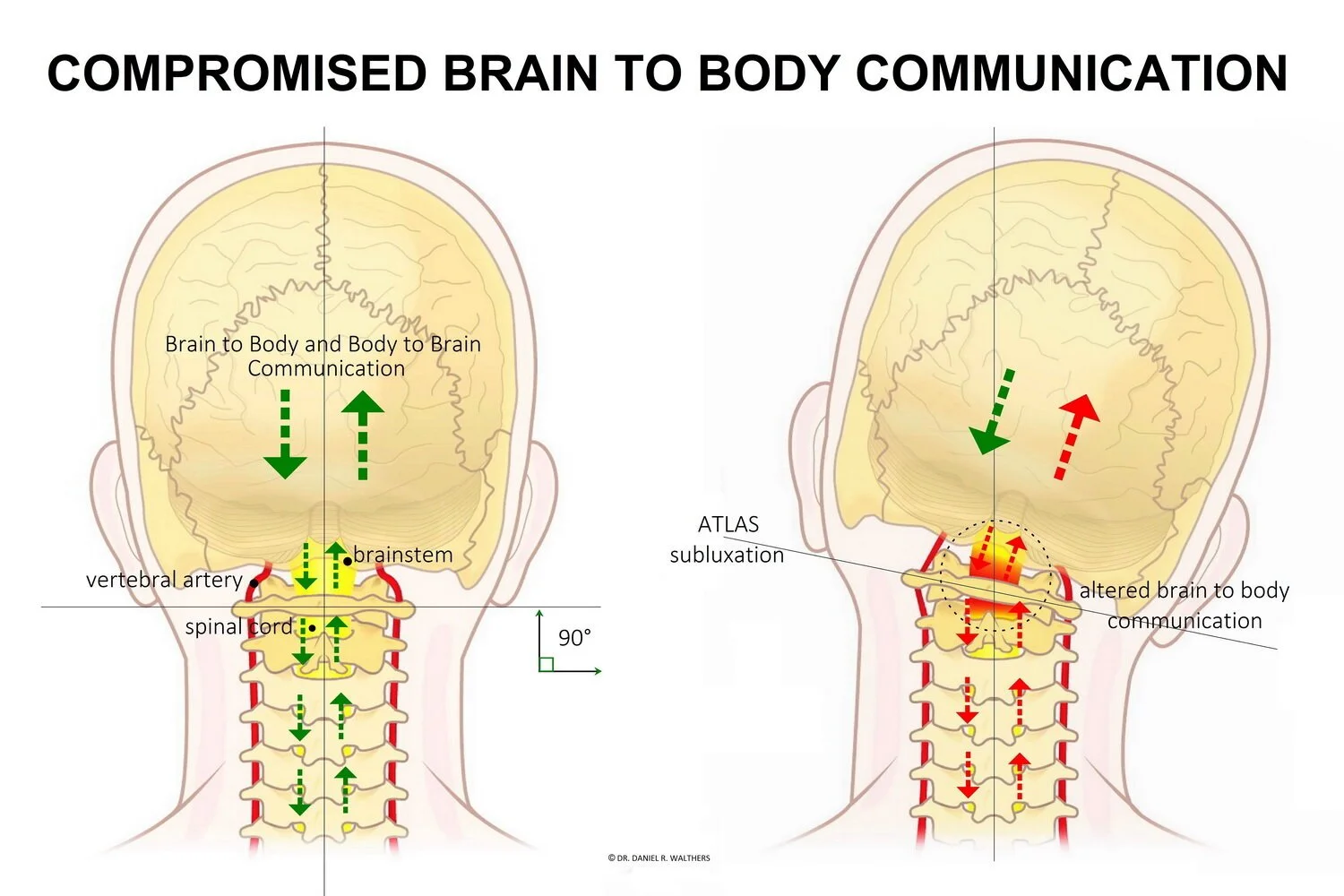
A vertebral subluxation causes the Atlas and Axis bones to become locked in a misaligned position. This lock will perpetuate spine imbalance and Nerve System tension. This tension will lead to abnormal sensitivity, perception and behavior of the brainstem and surrounding nerves.
A vertebral subluxation obstructs our body’s ability to resist negative influences. This includes different types of stressors such as pathogens and other infectious agents. Chiropractic aims to optimize Nerve function at the spinal level. Proper nerve supply is essential in controlling and regulating bodily function.
The primary way Chiropractors optimize nerve function is by correcting the vertebral subluxation through a specific adjustment. Studies that have measured the effect of Chiropractic adjustments on the immune system have shown that Chiropractic influences T and B lymphocytes, Natural Killer cell numbers, antibody levels, phagocytic activity and plasma beta-endorphin levels.
Chiropractic aims to correct nerve tension and spine imbalance. Chiropractors correct this by adjusting the vertebral subluxation of the upper cervical spine. Correcting the subluxation better optimizes the function of the brainstem and associated nerves. The Nerve System overall can sense, perceive and behave at a greater potential when a subluxation is corrected.
- Jarek Esarco, DC, CACCP
Related Blogs:
9 Ways to Promote the Health of Your Immune System
Immunity and Chiropractic
Feed Fear, Starve Health
Challenging the Status Quo: Debunking 10 Misconceptions About Immunity
Neuroimmune Dynamics: Immunostasis
Breaking News! Germ Theory Disproved! In 1892!